
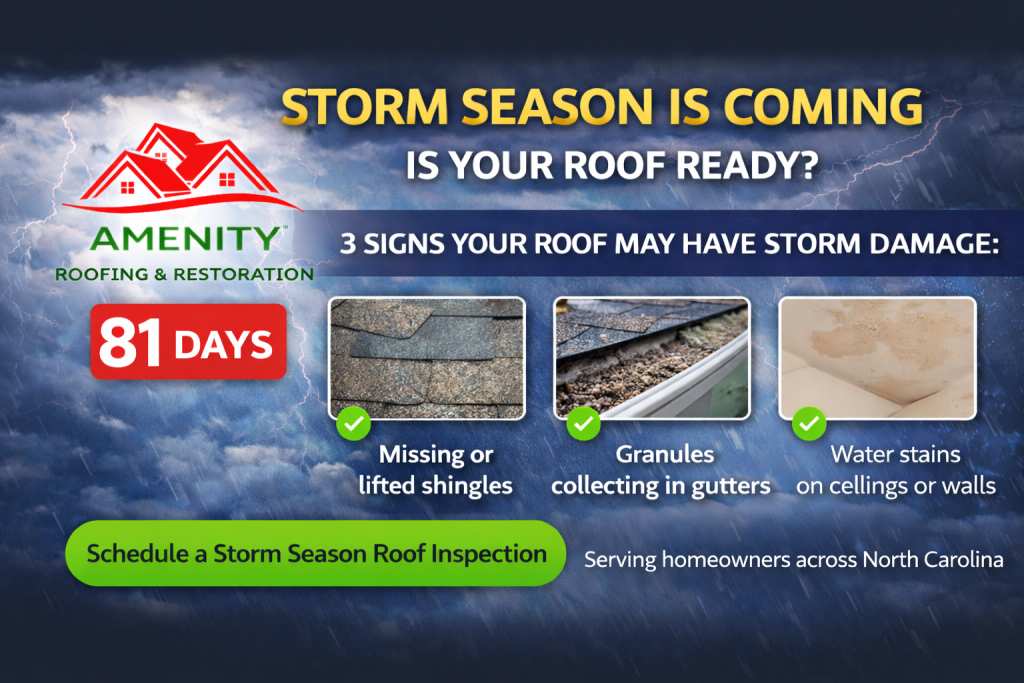
Storm season in North Carolina can bring strong winds, heavy rain, hail, and falling debris that can quickly damage a home’s roof. While some storms pass with minimal impact, others can cause hidden damage that may not be noticeable until leaks appear inside the home.
Preparing your roof before storm season arrives is one of the best ways to protect your home and avoid costly repairs. Understanding how insurance coverage works can also help homeowners respond quickly and confidently if damage occurs.
Below are a few things every homeowner should know before the next major storm arrives.
Why Roof Inspections Before Storm Season Matter
Your roof is the first line of defense protecting your home from the elements. Even small weaknesses can become serious problems during a strong storm.
Many homeowners don’t realize their roof has been compromised until water begins entering the home. By that point, damage may already extend to ceilings, insulation, walls, or flooring.
Scheduling a professional roof inspection before storm season helps identify potential issues early so they can be addressed before severe weather arrives.
Three Common Signs Your Roof May Already Have Storm Damage
Storm damage is not always obvious from the ground. However, there are several warning signs homeowners can look for.
1. Missing or Lifted Shingles
Strong winds can loosen or completely remove shingles from the roof. When shingles are missing or lifted, the protective barrier of the roof is weakened, allowing water to penetrate beneath the roofing system.
Even if only a few shingles are affected, it’s important to have the area inspected to prevent further damage.
2. Granules Collecting in Gutters
Asphalt shingles contain protective granules that shield the roof from sunlight and weather exposure. After storms, these granules may wash into gutters or accumulate near downspouts.
If you notice large amounts of shingle granules, it may indicate that your roof has experienced impact or wind damage.
3. Water Stains Inside the Home
Water stains on ceilings or walls are often one of the first signs that a roof leak has developed. These stains may appear as discolored patches, bubbling paint, or damp spots.
If water stains appear after a storm, it’s important to address the issue quickly to prevent mold growth or structural damage.
Steps Homeowners Can Take to Prepare for Storm Season
Preparation can significantly reduce the likelihood of serious damage during storms.
Schedule a Professional Roof Inspection
A professional inspection allows experienced roofing specialists to check for loose shingles, flashing issues, or weak areas that could fail during a storm.
Early repairs are often much less expensive than emergency repairs after damage occurs.
Clean Gutters and Downspouts
Clogged gutters can prevent proper drainage during heavy rain. When water backs up, it can seep beneath roofing materials and cause leaks.
Keeping gutters clear helps ensure water flows safely away from the home.
Trim Overhanging Tree Branches
Large branches hanging above the roof can break during storms and cause significant damage.
Trimming trees near your home reduces the risk of debris impacting the roof during high winds.
Secure Outdoor Items
Outdoor furniture, equipment, or loose materials can become airborne during strong winds. These items may strike the roof or other parts of the home.
Storing or securing outdoor items before storms arrive can help prevent avoidable damage.
Understanding Roof Damage Insurance Coverage
Many homeowners are unsure what their insurance policy covers when storm damage occurs.
In many cases, homeowners insurance policies do cover roof damage caused by events such as:
• wind storms
• hail
• falling debris
• severe weather events
However, insurance companies typically require that the damage be documented and verified.
What Happens During the Insurance Claim Process
If storm damage is suspected, homeowners usually begin by contacting their insurance provider to report the issue.
The insurance company may then schedule an adjuster to inspect the property and determine the extent of the damage.
During this process, contractors often work directly with homeowners and adjusters to help identify damage and ensure the repair scope accurately reflects what the home needs.
Proper documentation and clear communication are essential for a smooth claims process.
Why Early Inspections Are Important for Insurance Claims
Waiting too long to inspect storm damage can sometimes complicate insurance claims.
If damage worsens over time due to neglect or delayed repairs, insurance providers may question whether the damage occurred during the reported storm event.
Having a professional inspection completed shortly after a storm can help establish clear documentation and avoid confusion later.
Protecting Your Home Before the Next Storm
Storm season is a part of life in North Carolina, but proactive maintenance and inspections can help homeowners avoid major surprises.
A roof inspection before severe weather arrives can identify potential problems early and help ensure your home is ready for whatever the season brings.
At Amenity Roofing & Restoration, our team helps homeowners understand the condition of their roof and provides honest recommendations for repairs or improvements when needed.
Schedule a Roof Inspection
If you’re unsure about the condition of your roof or want to prepare your home before storm season begins, a professional inspection can provide peace of mind.
Amenity Roofing & Restoration provides roofing, restoration, and construction services for homeowners across North Carolina.
Our team is committed to quality craftsmanship, clear communication, and helping homeowners protect what matters most.